



English at St James - Reading
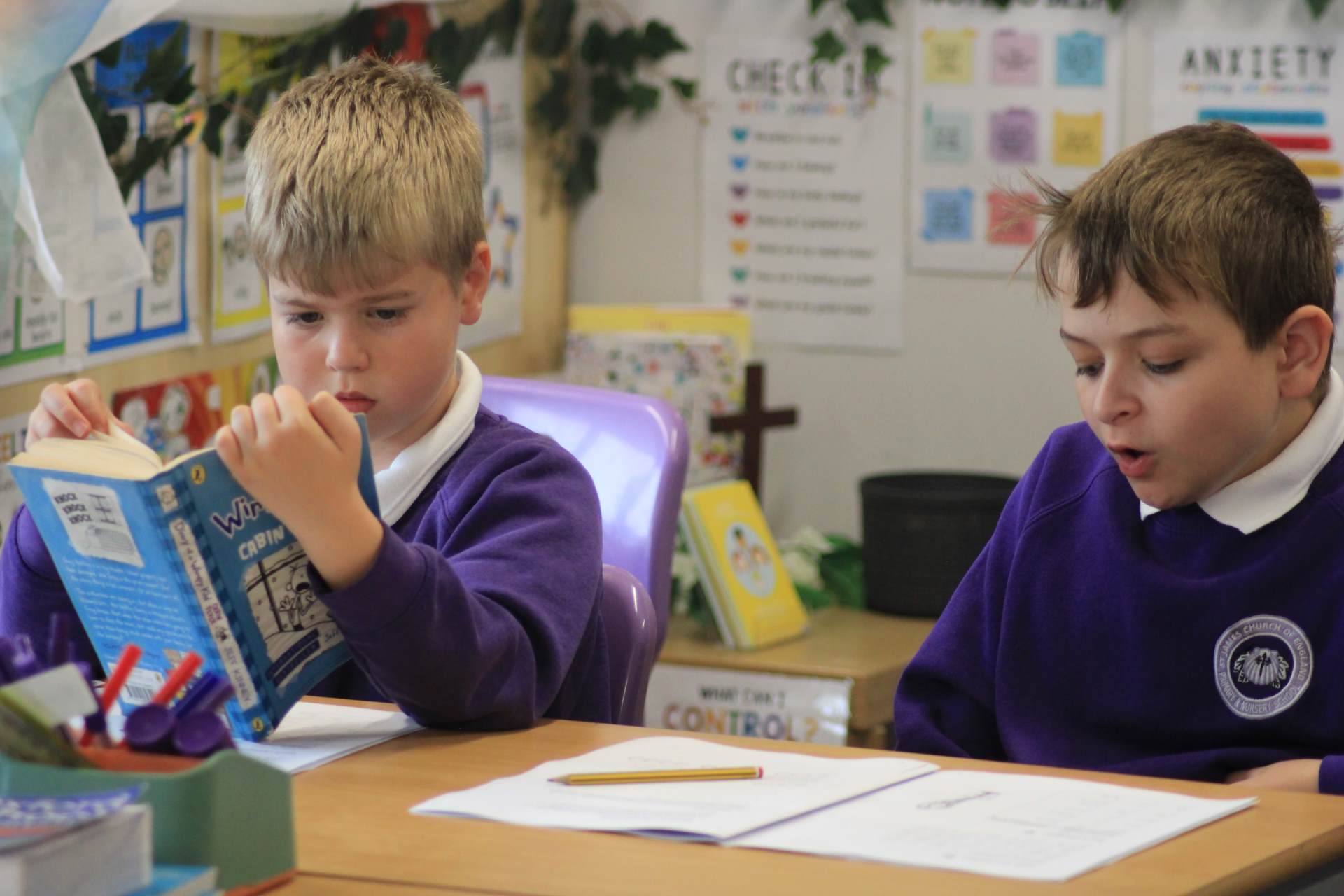
Why we teach English
English is the foundation of all learning. We want children to grow into confident communicators who enjoy reading. By exploring stories, poems, information texts and rich language, children learn about different places, people and experiences. English helps children develop imagination, empathy and creativity, and gives them the skills they need to succeed in every subject across the curriculum.
How we teach English
English is woven into daily life in school. Children learn through high-quality books and lively discussions.
- Phonics helps younger children learn how letters and sounds work together so they can read unfamiliar words.
- Reading lessons help children understand stories deeply, talk about characters and events, and build strong comprehension skills.
- Vocabulary is taught explicitly because knowing more words helps children understand more of what they read.
Drama, storytelling and group talk activities help children build speaking and listening skills in an enjoyable, confidence boosting way.
What we want children to learn
We want every child to become fluent readers. Most importantly, we hope they finish primary school with a love of reading that stays with them for life.
Intent
At St James, English lies at the heart of our curriculum, with reading as the foundation upon which all other learning is built. We believe that when children become confident, fluent readers, they unlock the knowledge, language and imagination needed to thrive across every subject.
Our intent is to:
- Foster a love of reading from the earliest stages and build confident, fluent readers who read widely for pleasure and purpose.
- Ensure every child has strong spoken language, comprehension and oracy skills to express themselves clearly and creatively.
- Provide a rich, language‑driven curriculum that supports vocabulary development, metacognition and critical thinking.
- Ensure all children, regardless of starting point, receive the support they need to keep up - not catch up.
Implementation
Reading
Early Reading & Phonics
- We use Read Write Inc. Phonics to teach early reading, delivered daily as whole‑class phonics, ensuring consistency and high expectations for all.
- Additional intervention and small‑group support are provided to help children keep up, maintaining a strong pace through the programme.
- In EYFS, early reading is strengthened using Ruth Miskin’s Talk Through Stories to immerse children in rich vocabulary, narrative structure and high‑quality texts.
- Children also learn a wide repertoire of poetry through Say a Poem, supporting rhythm, memory and language development.
Progression in Reading
- Once children move beyond phonics, reading is taught through a combination of:
- Small‑group guided reading in a carousel model.
- Whole‑class reading sessions (“Book Club”) that build fluency, comprehension and a shared love of literature.
- A rich, well‑curated reading environment and high‑quality book stock ensure children see themselves as readers throughout the school.
Impact
By the time children leave St James, they will:
- Be fluent, confident readers who enjoy reading for pleasure and can use reading to learn across the curriculum.
- Have a strong foundation of vocabulary, comprehension and spoken language, enabling them to participate fully in discussions and express ideas clearly.
- Show secure knowledge of phonics, spelling patterns, grammar rules and handwriting habits that enable them to write with confidence.
- Demonstrate critical thinking and reflective skills, enhanced through Let’s Think in English, enabling them to justify opinions, evaluate perspectives and engage thoughtfully with texts.
- Be well‑prepared for the demands of secondary education, equipped with the literacy skills needed for lifelong learning.